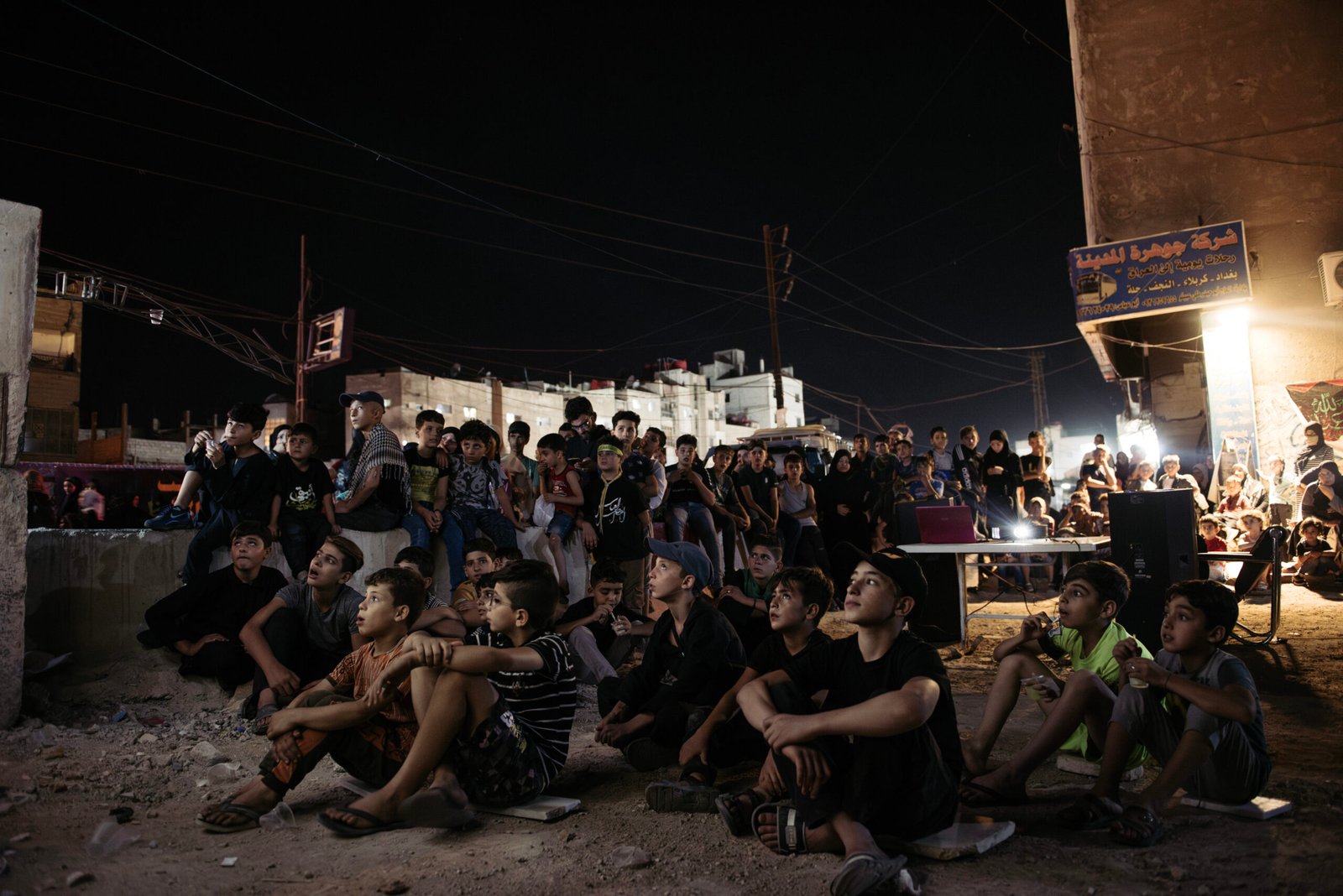
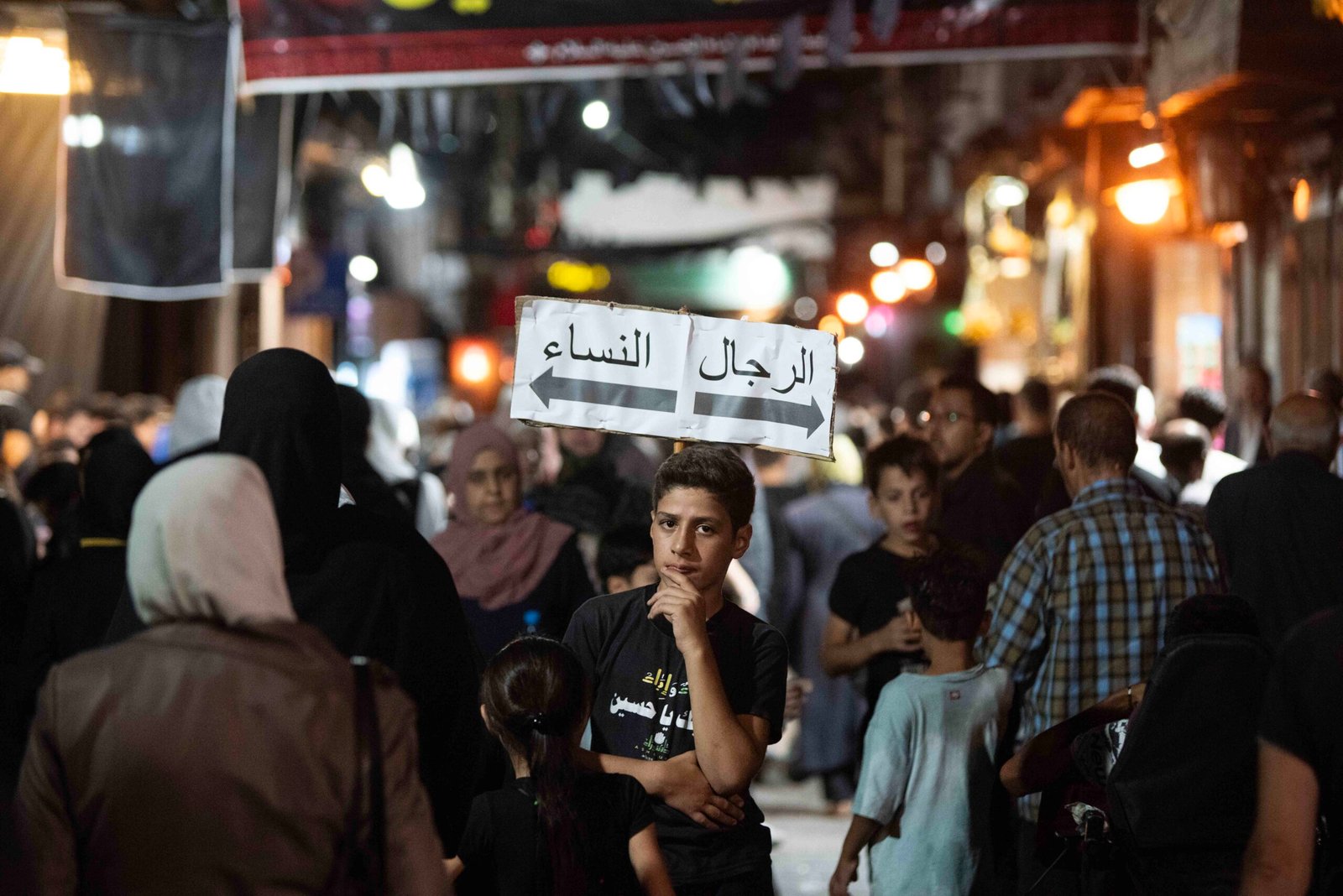
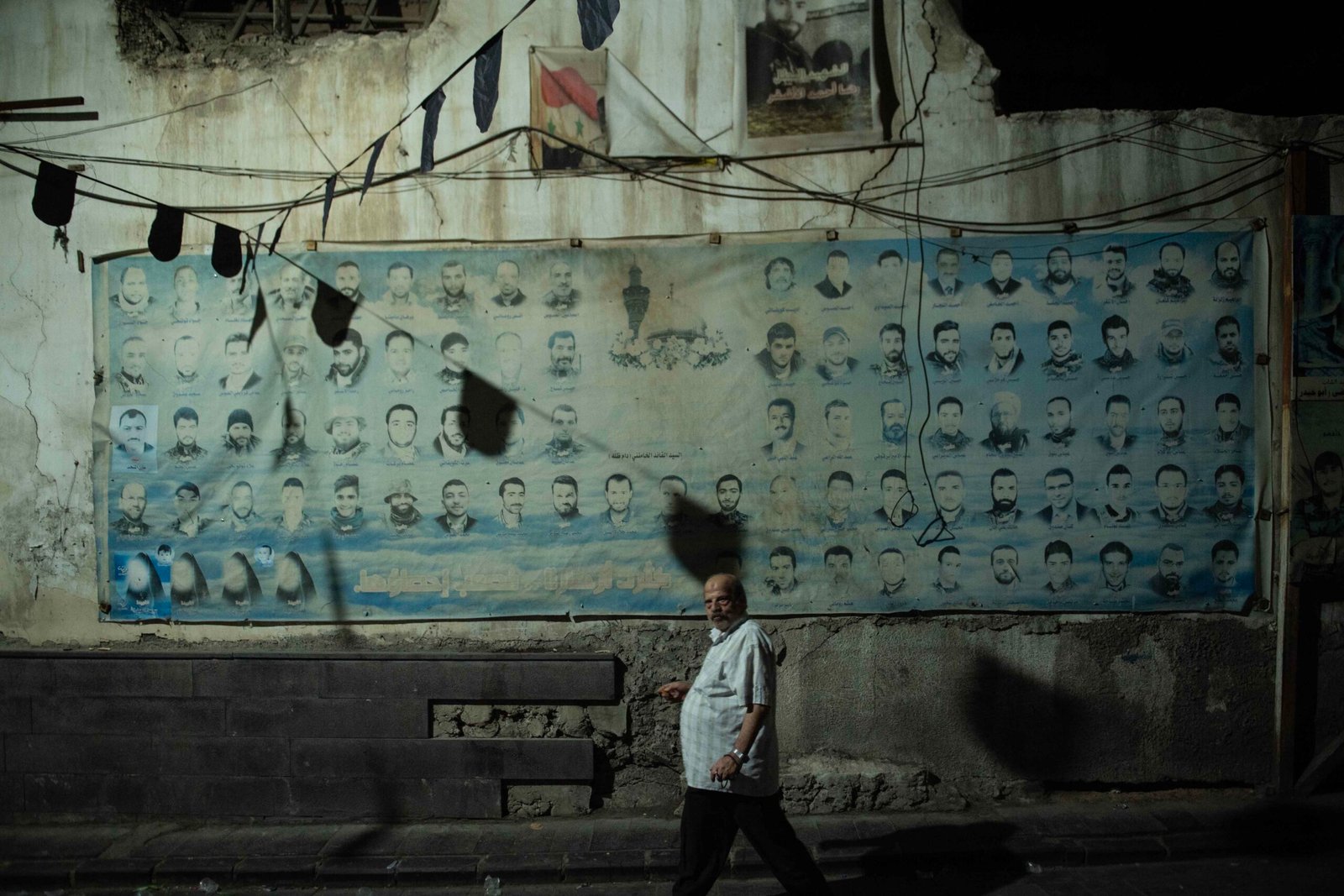
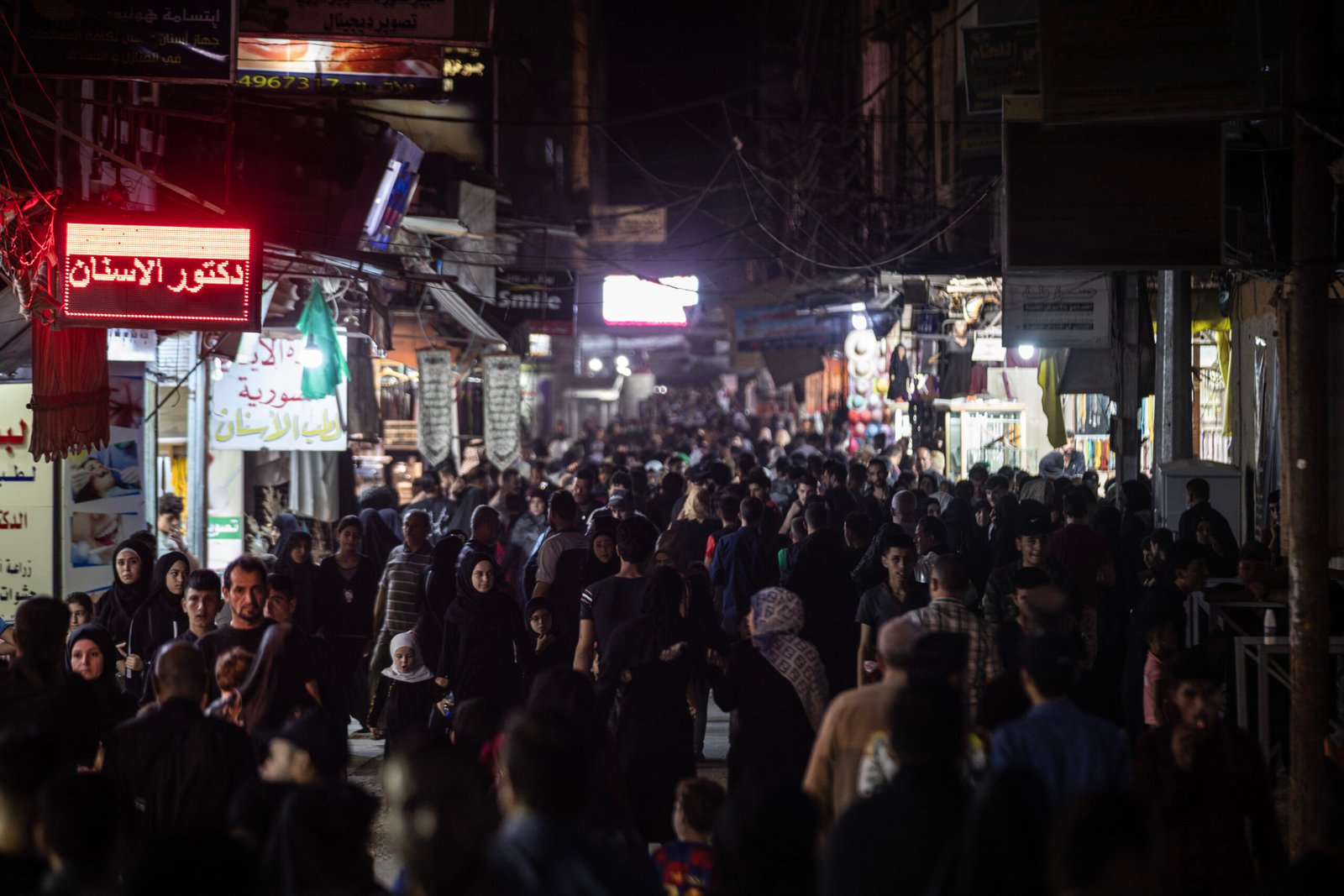
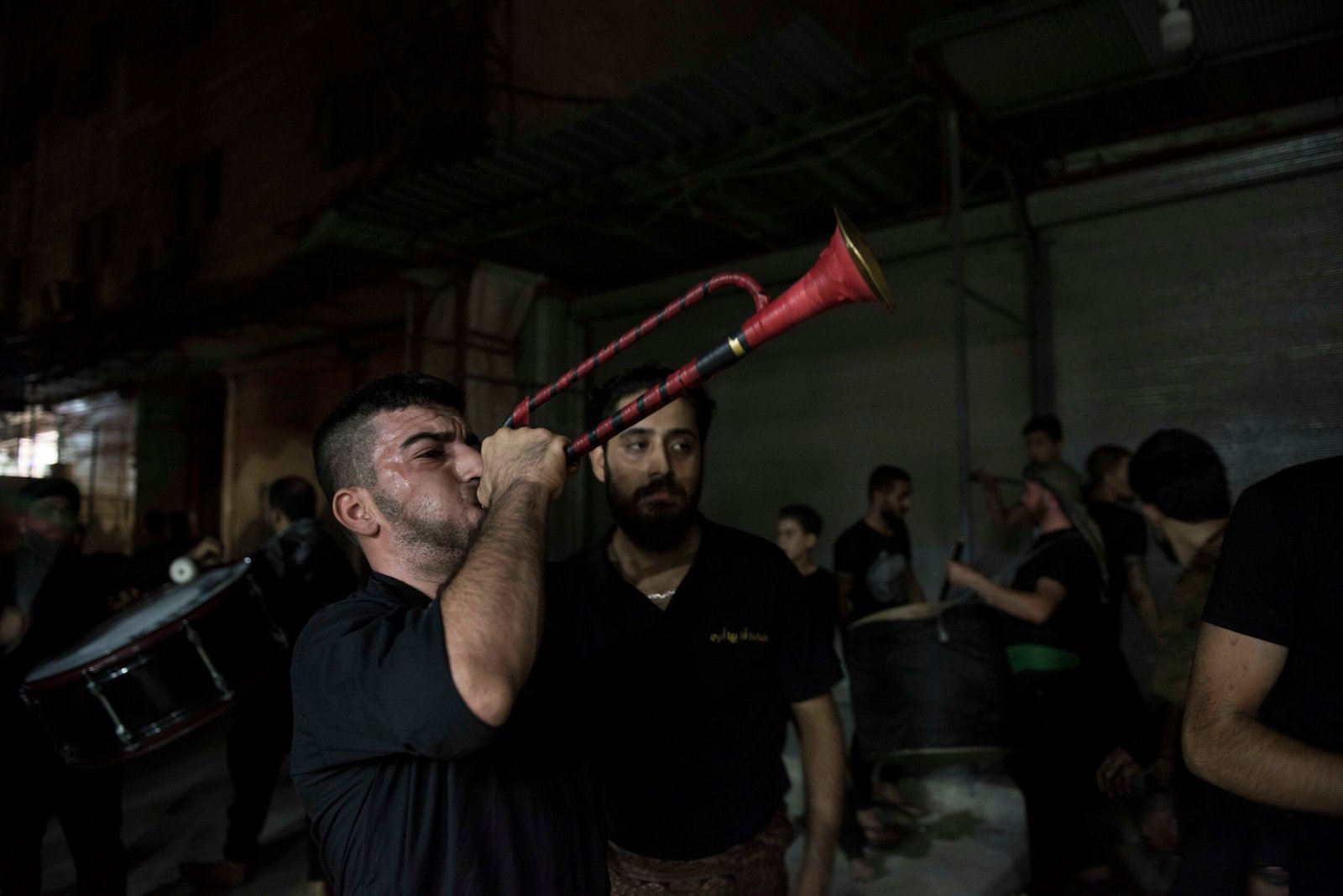
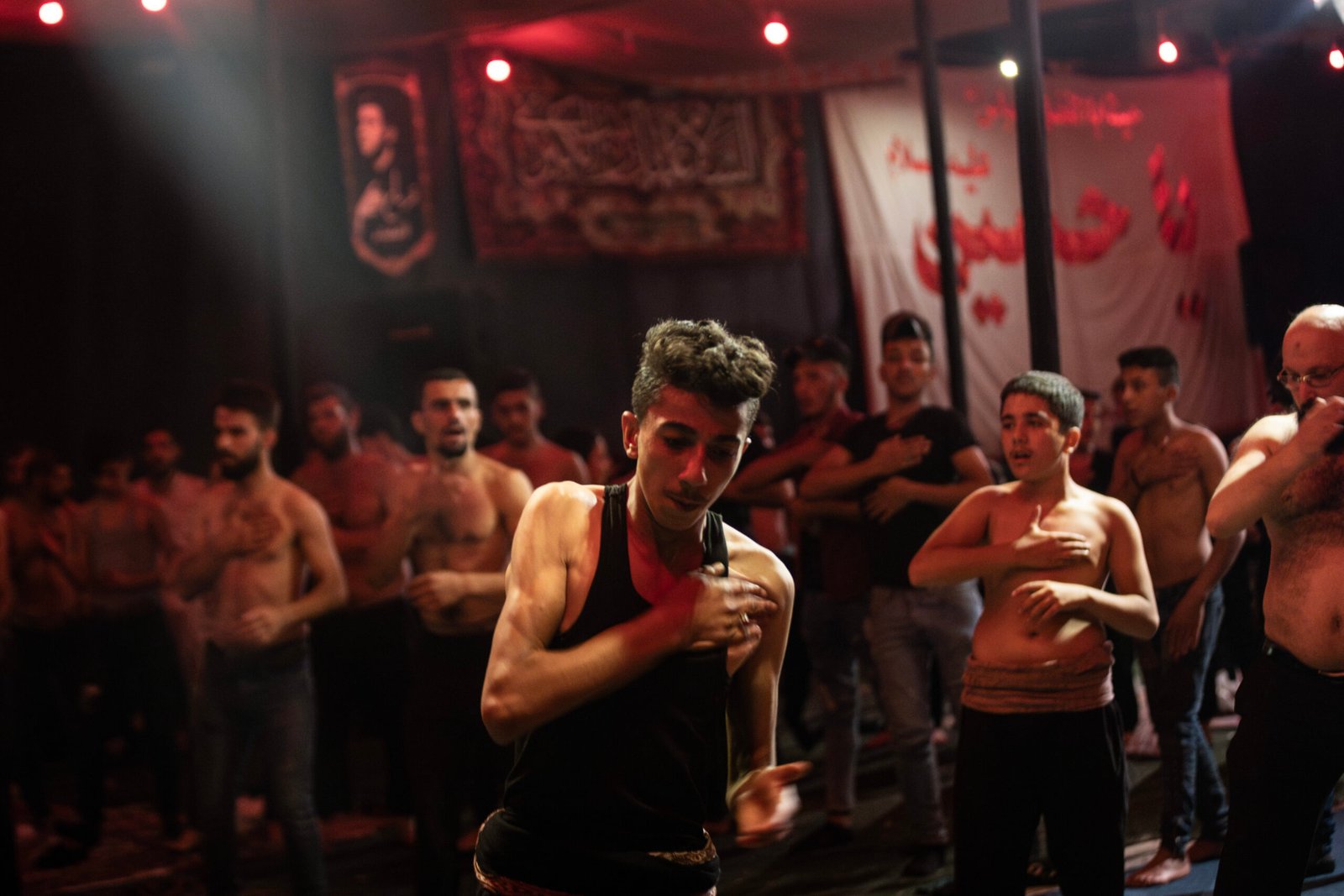
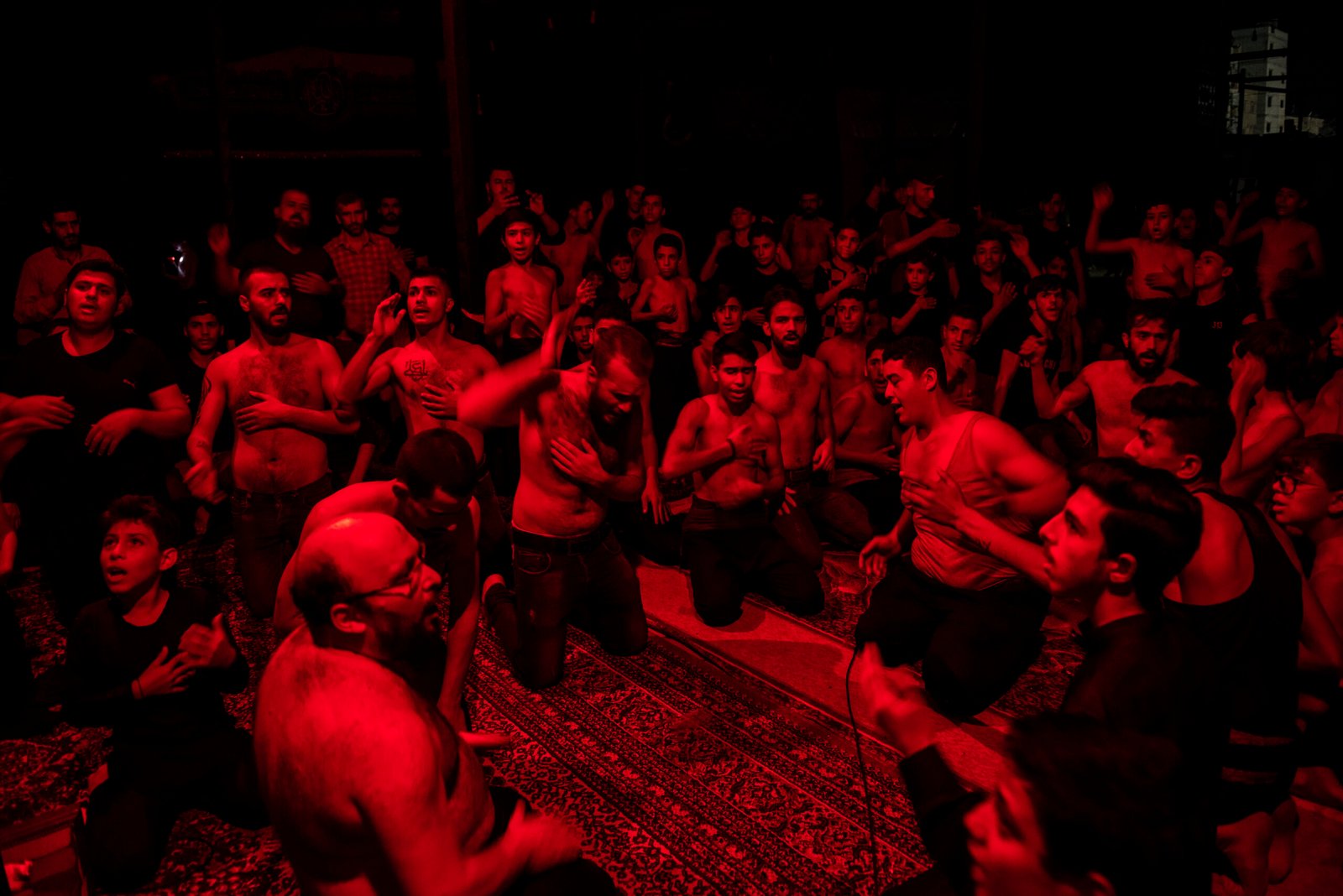
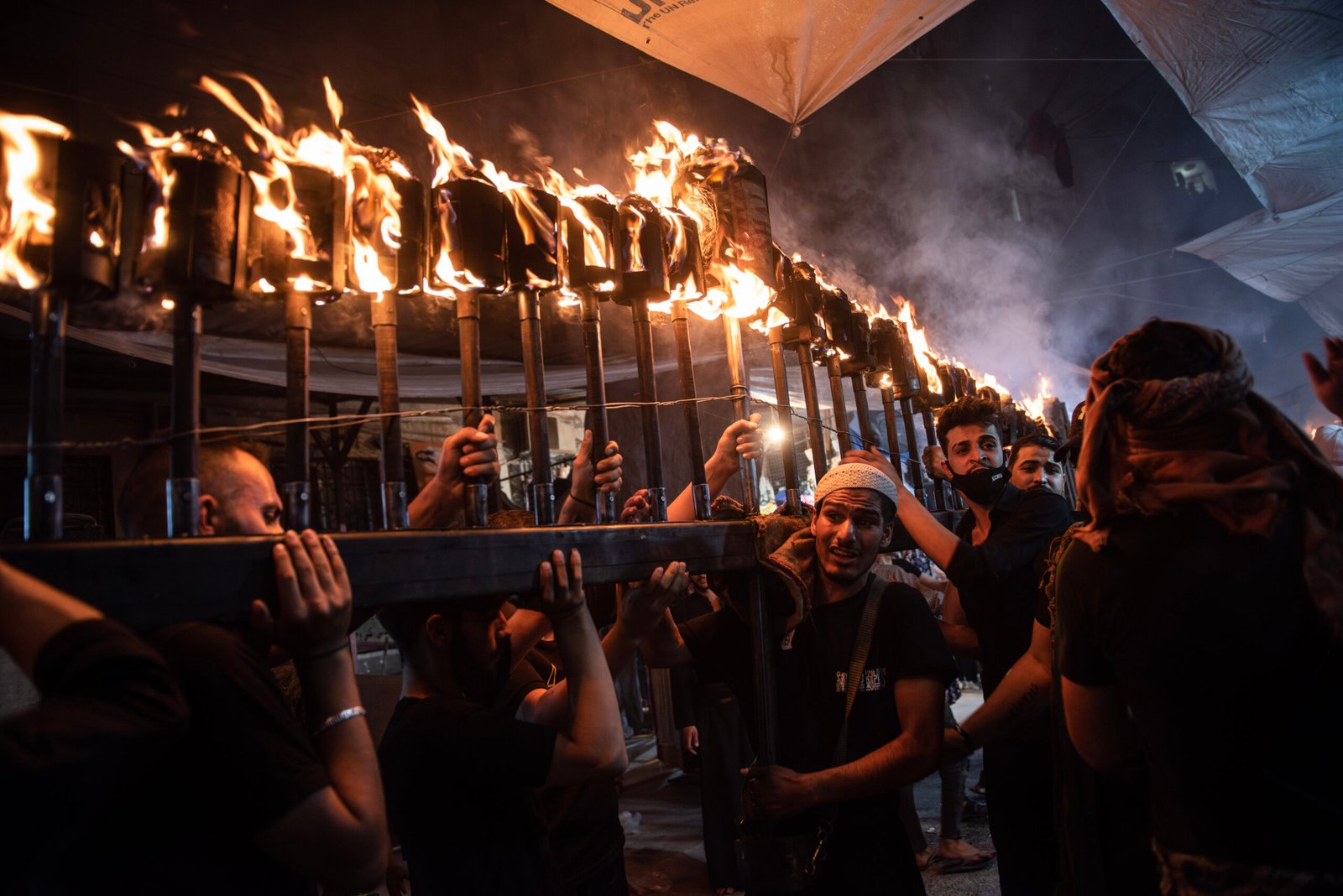
Photographing religious events in Syria was never just a journalistic challenge; it was a highly risky undertaking. Beyond the regime’s security restrictions, the organizers themselves tightly controlled access and rarely admitted outsiders with cameras. Documenting Ashura seemed an impossible dream.
In 2021, while working under the radar for IranWire, an outlet investigating Iran’s proxies across the Middle East, that opportunity came from an unexpected place: a taxi ride. The driver, Abu Jaafar, had a military vest behind his seat, a radio, and a large ring. I assumed he was a soldier driving a taxi for extra income, common during Syria’s economic collapse. But when we passed a Ministry of Defense checkpoint unquestioned, I asked what he did.
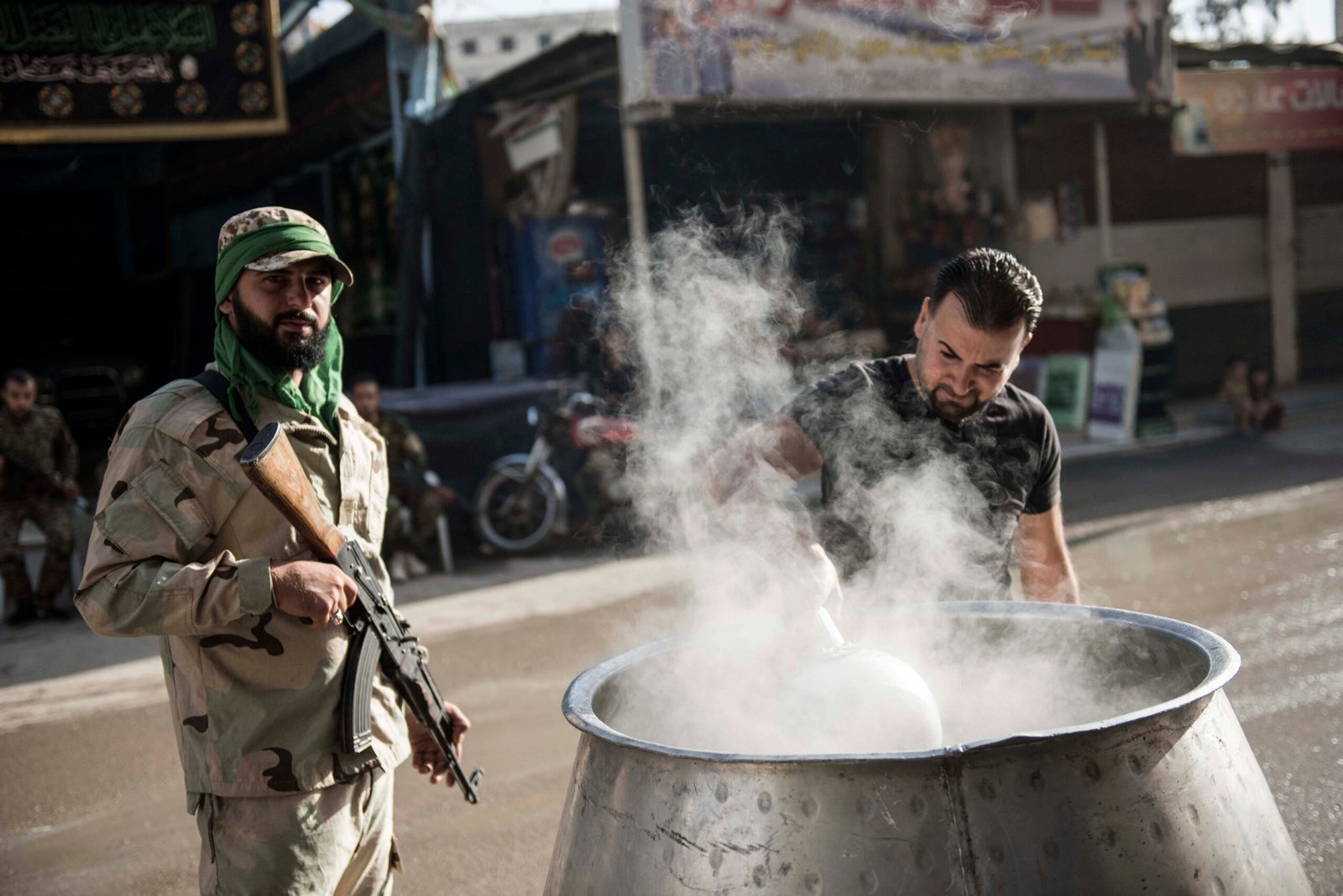
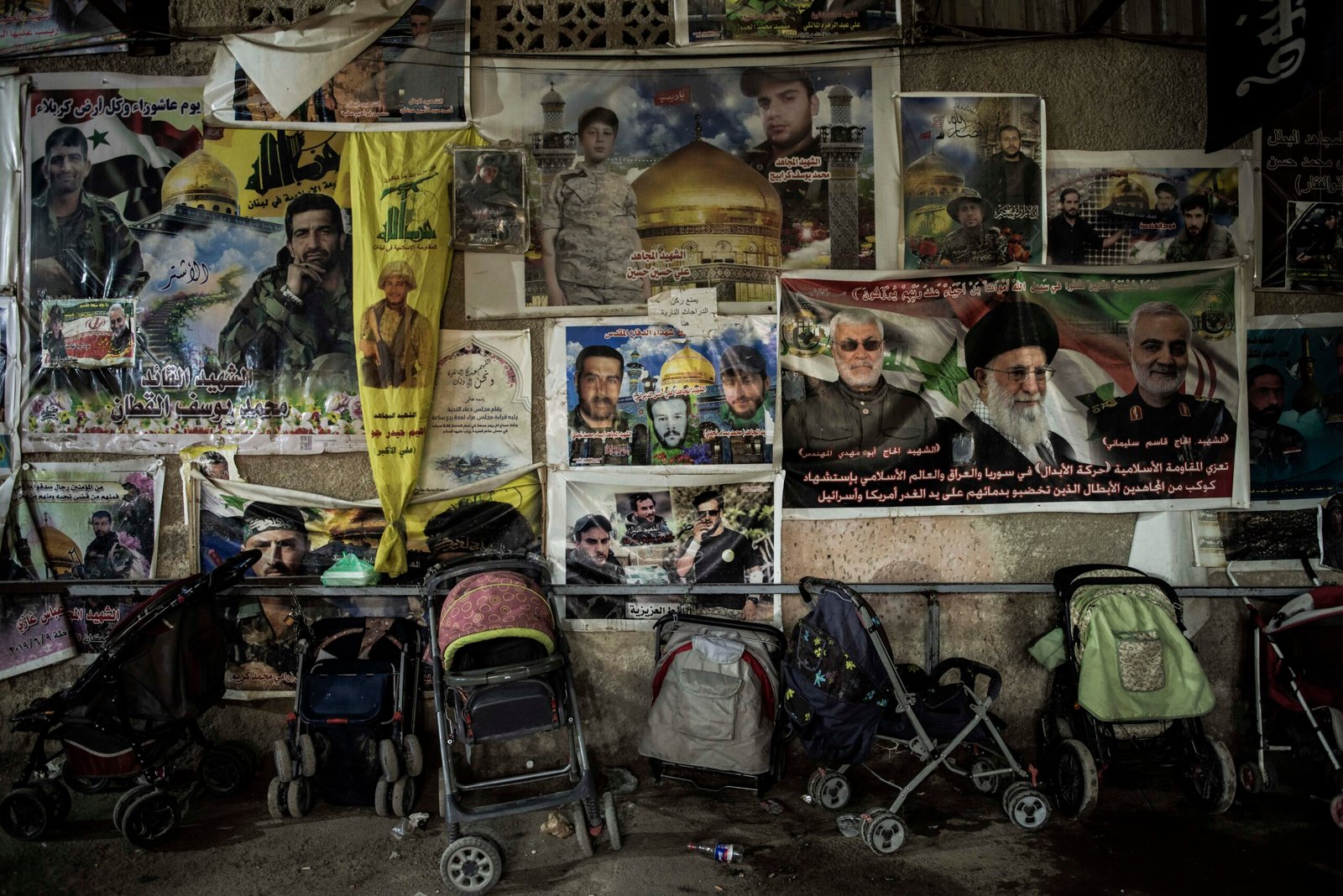
He smiled and said he was a senior member of the Abu al Fadl al Abbas Brigade, which secured southern Damascus, including Sayyida Zaynab. I told him I had dreamed of photographing Ashura for years. He paused, looked at me, and said, “I’ll help you.”
A week later, before dawn, we drove toward Sayyida Zaynab. Driven by excitement and anxiety, I photographed almost everything, aware this might be my only chance.
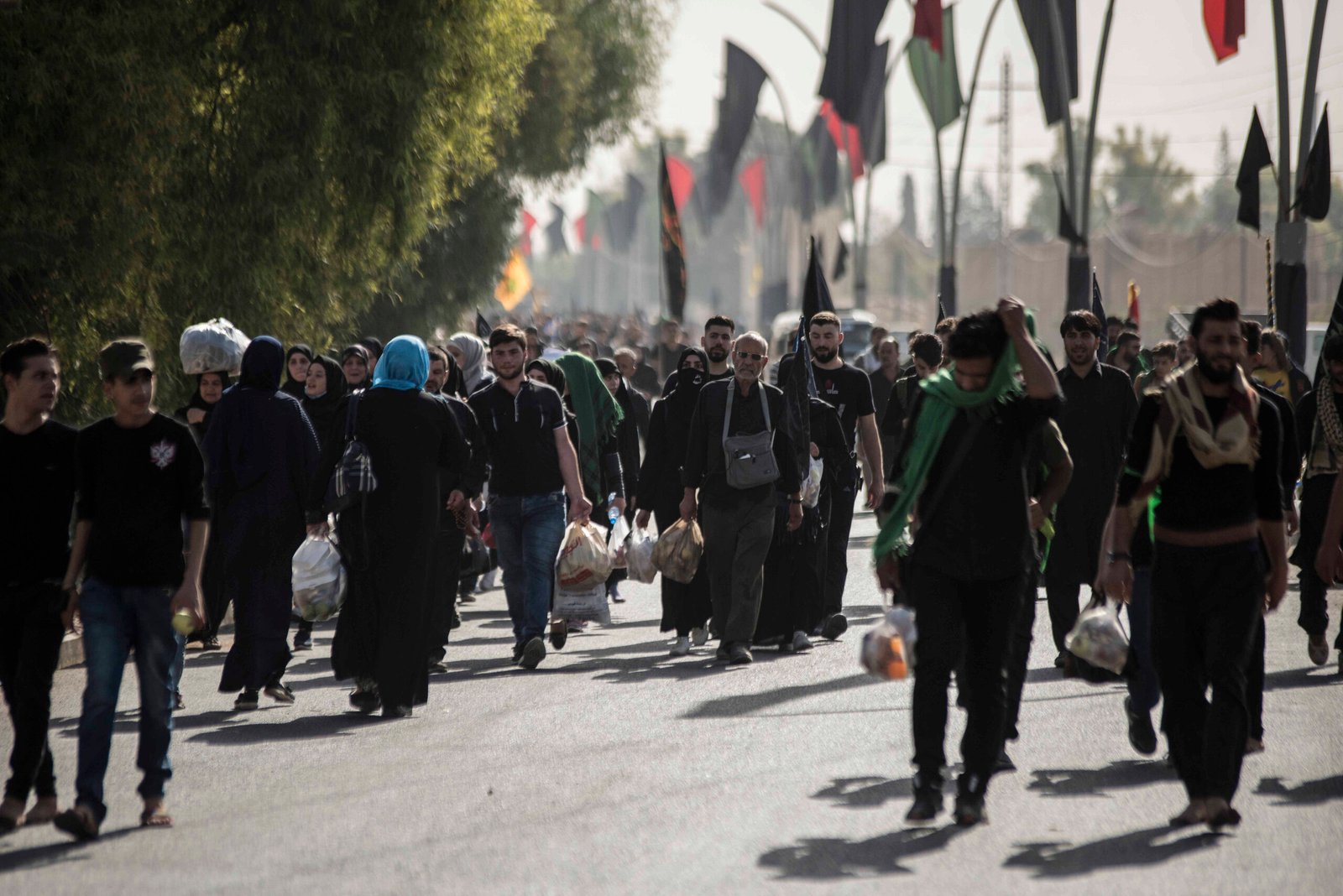
Near the shrine, the airport road had become a river of pilgrims from Iraq, Iran, Afghanistan, Lebanon, and across Syria. Overwhelmed by the scale, I never stopped photographing.
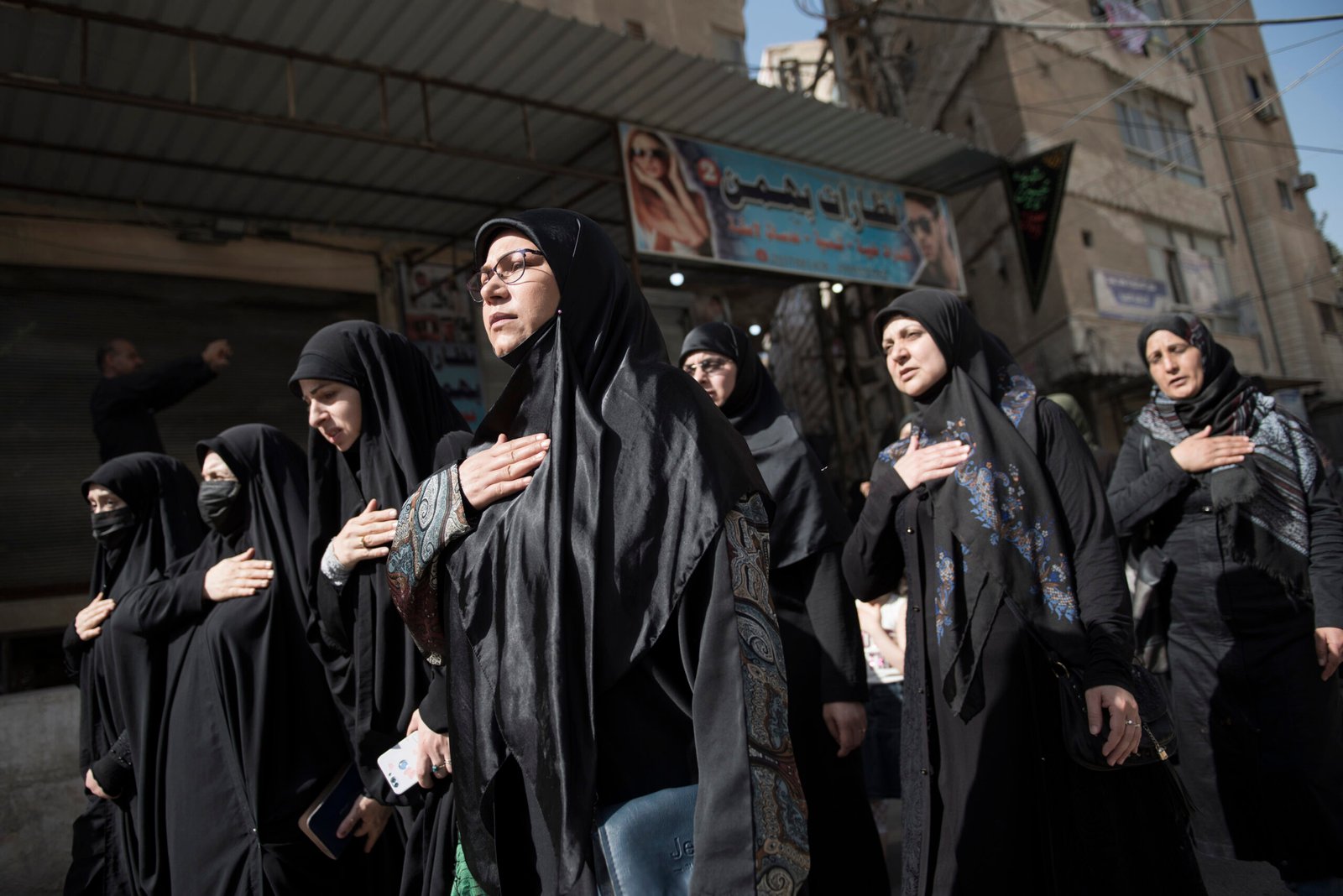
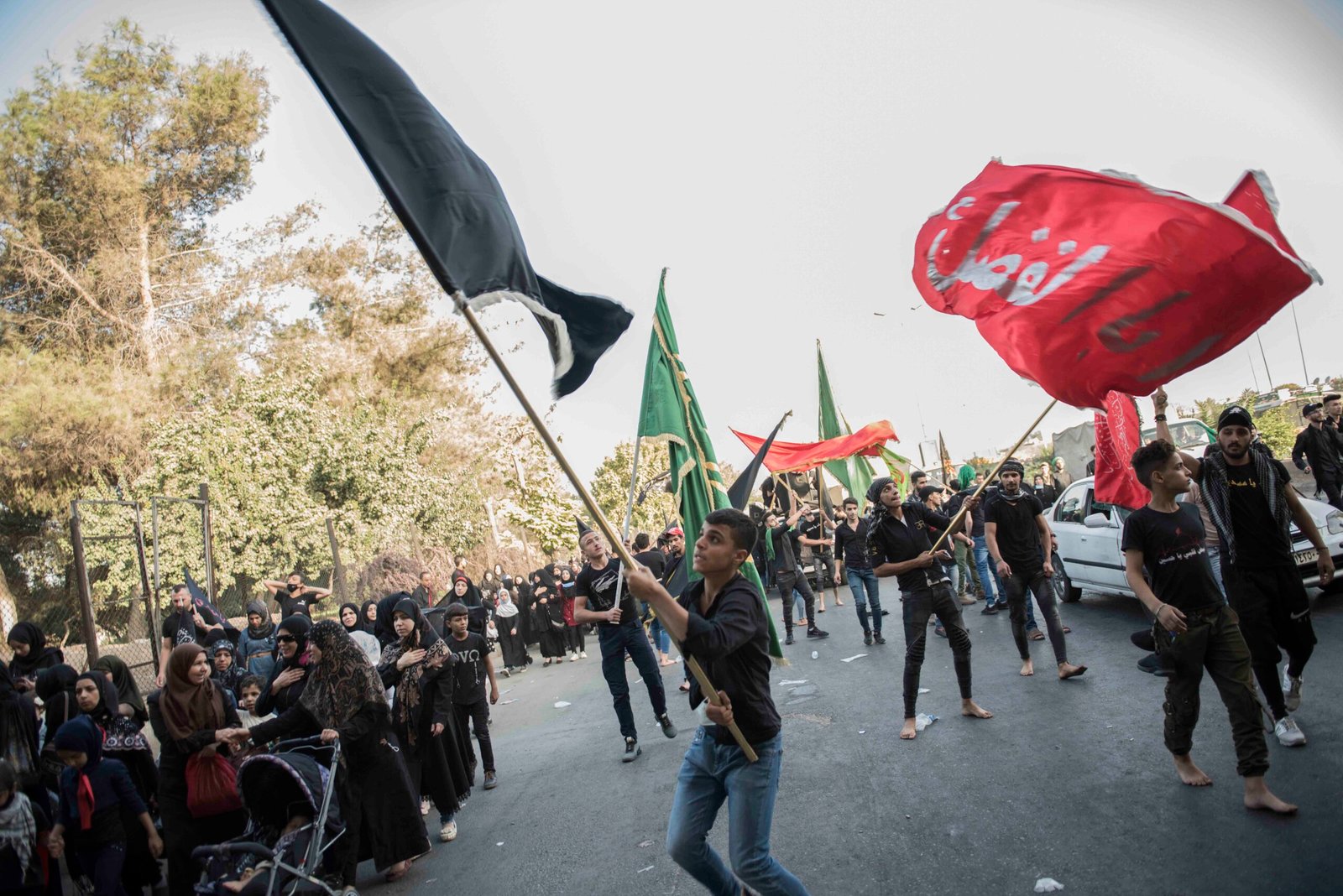
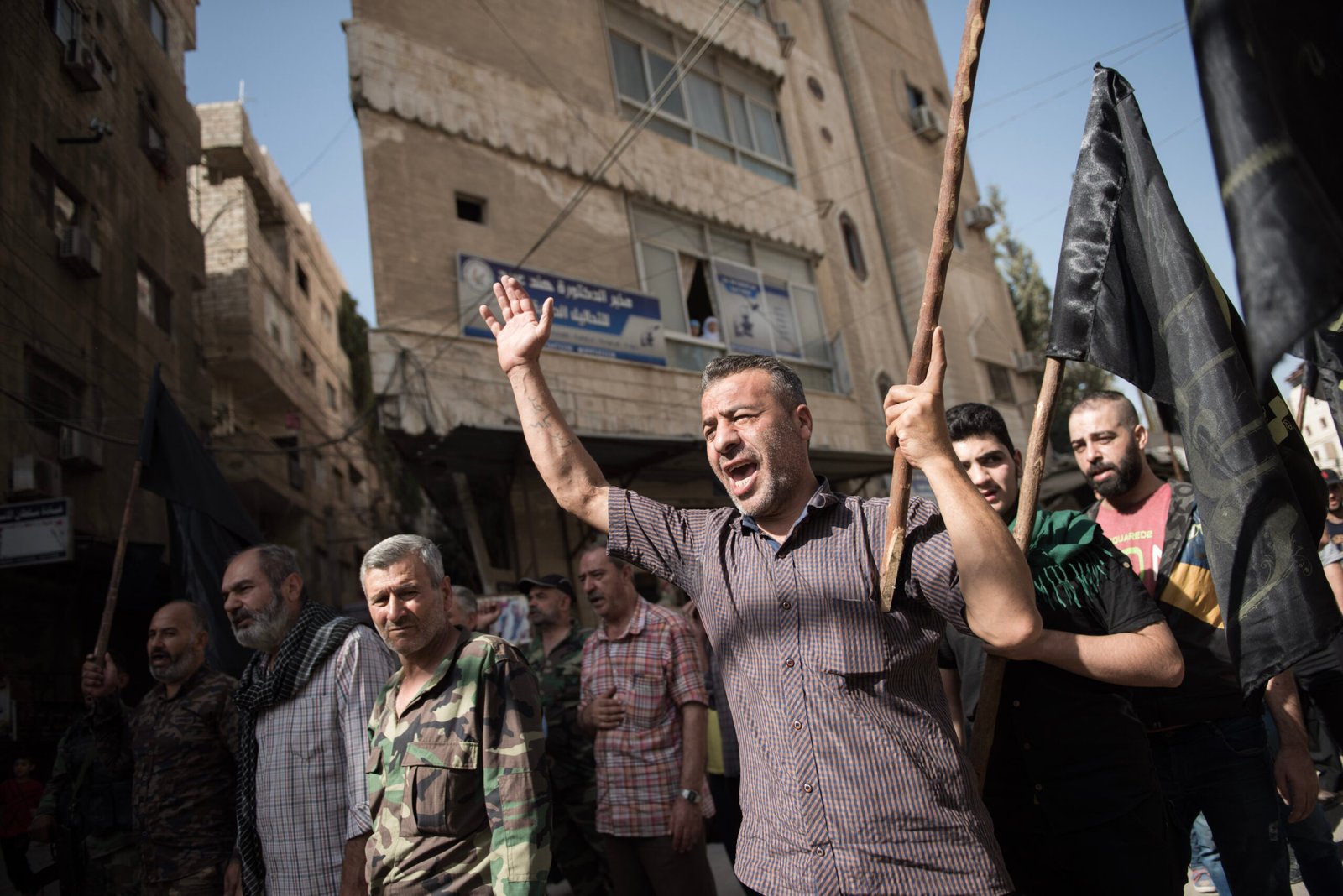
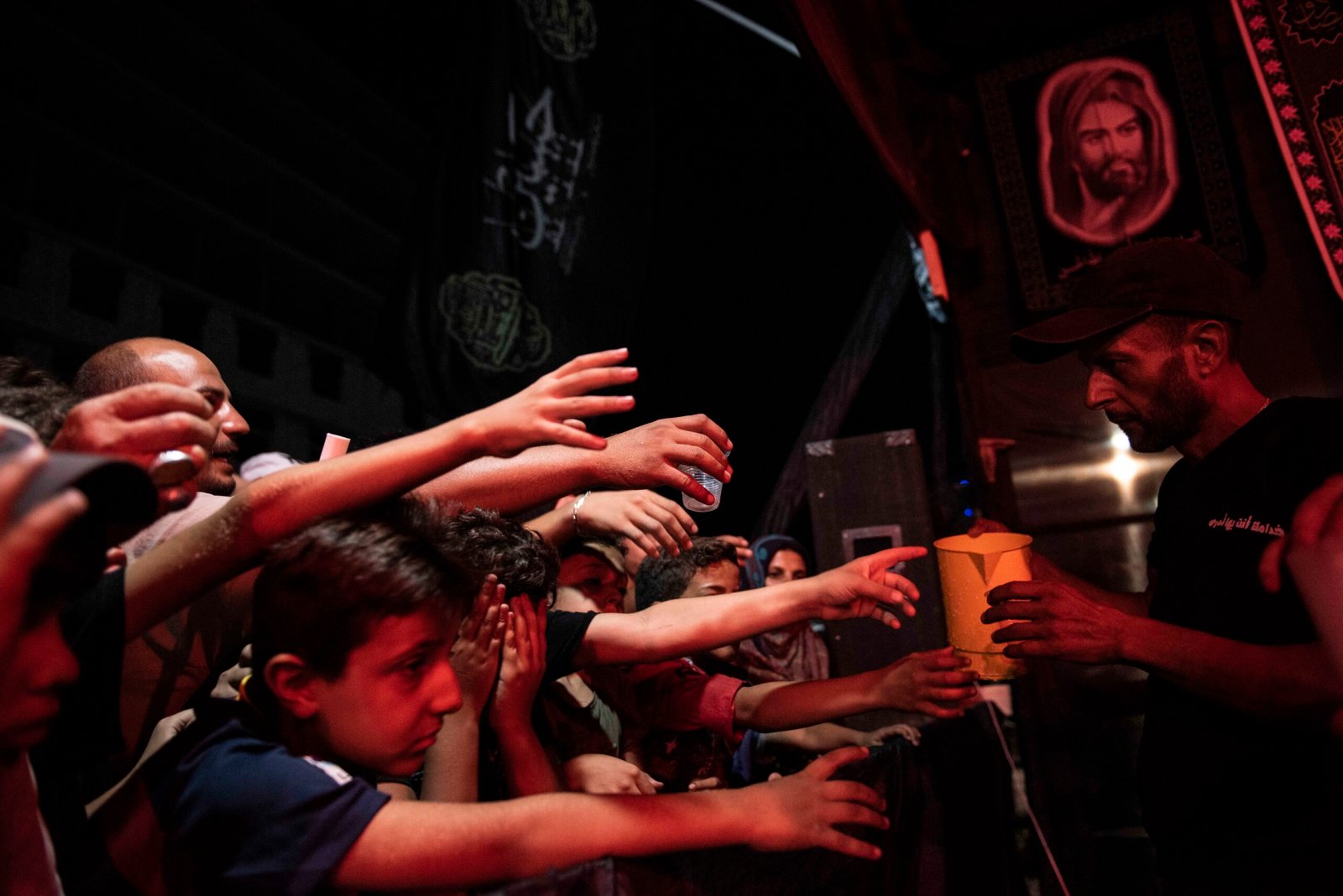
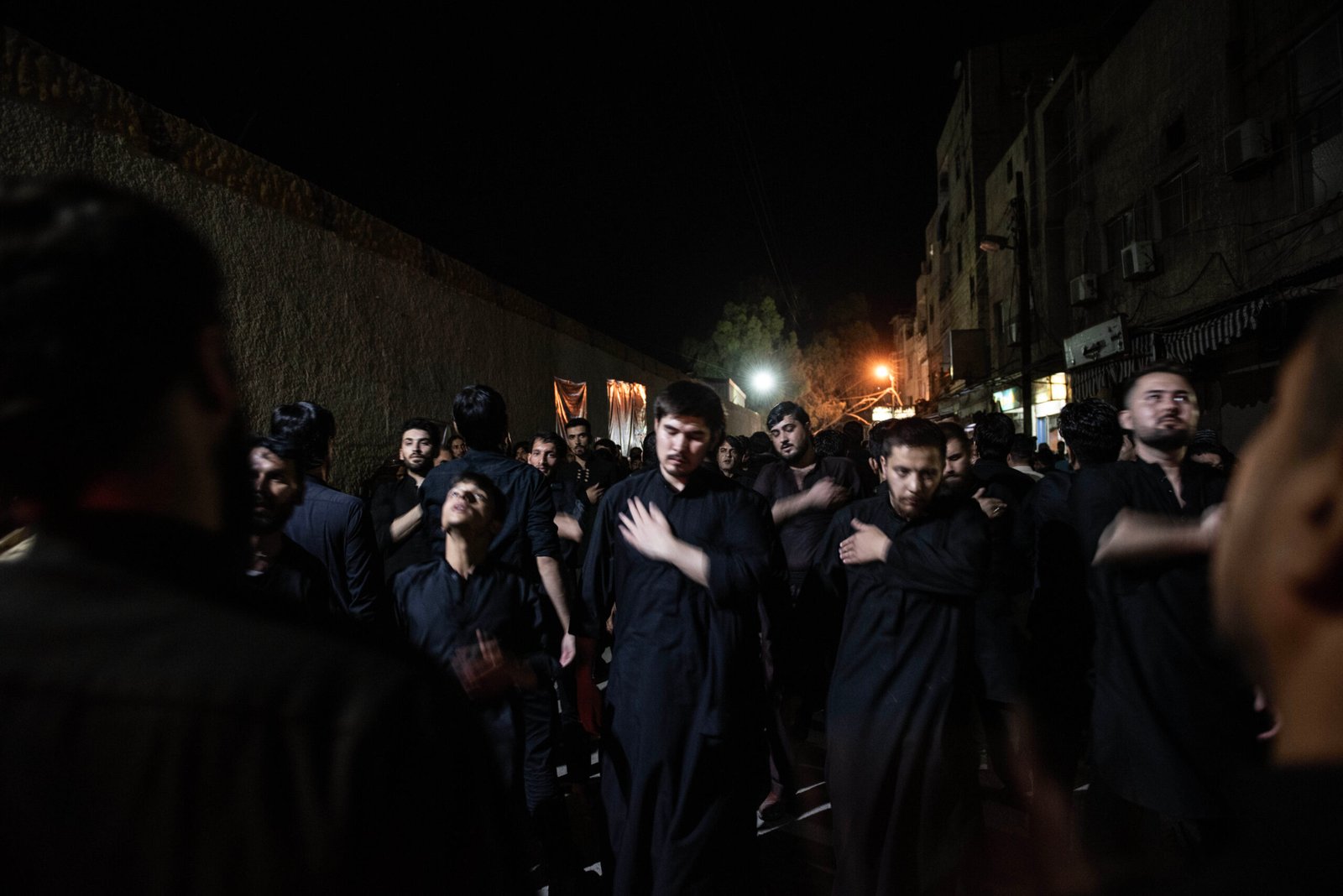
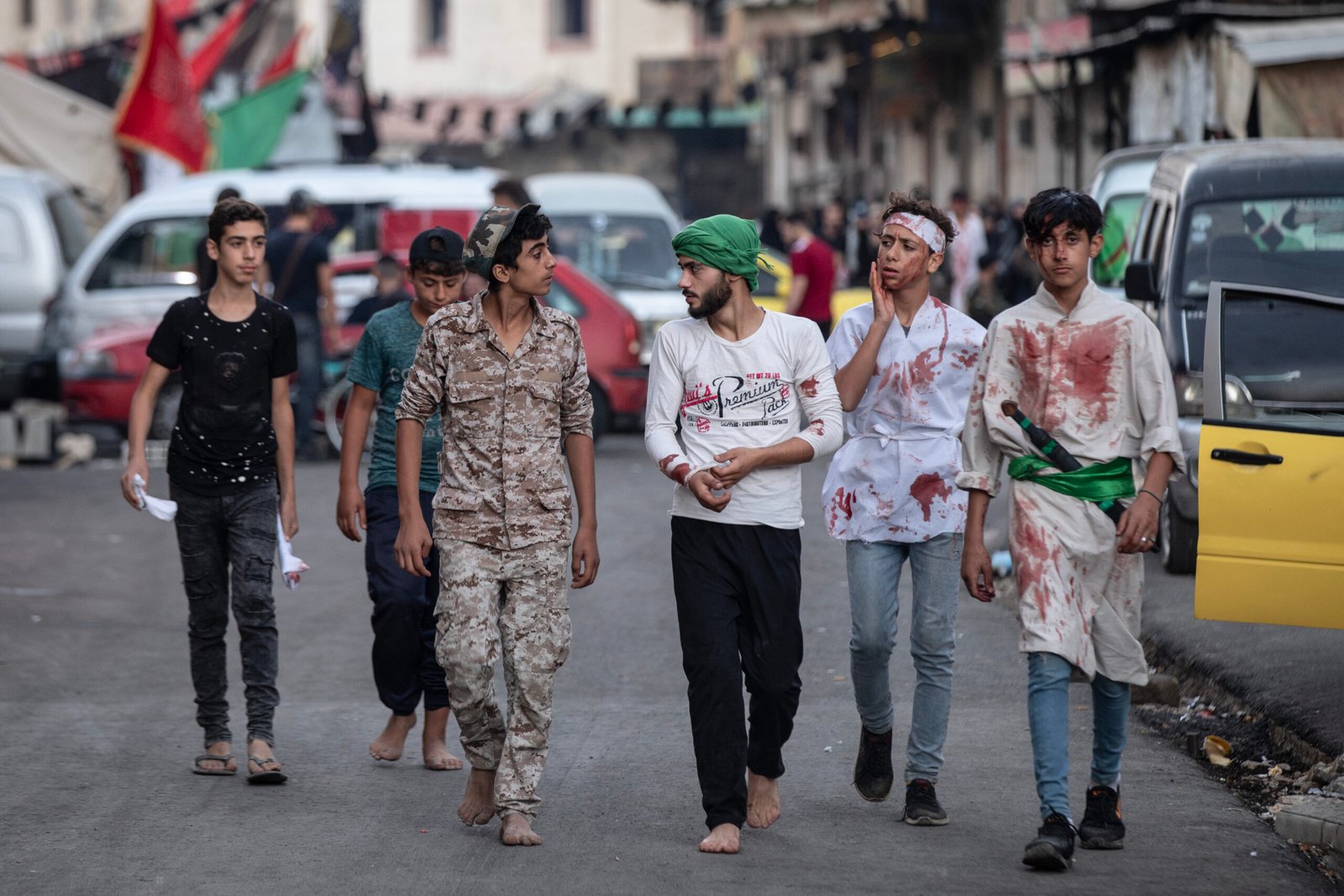
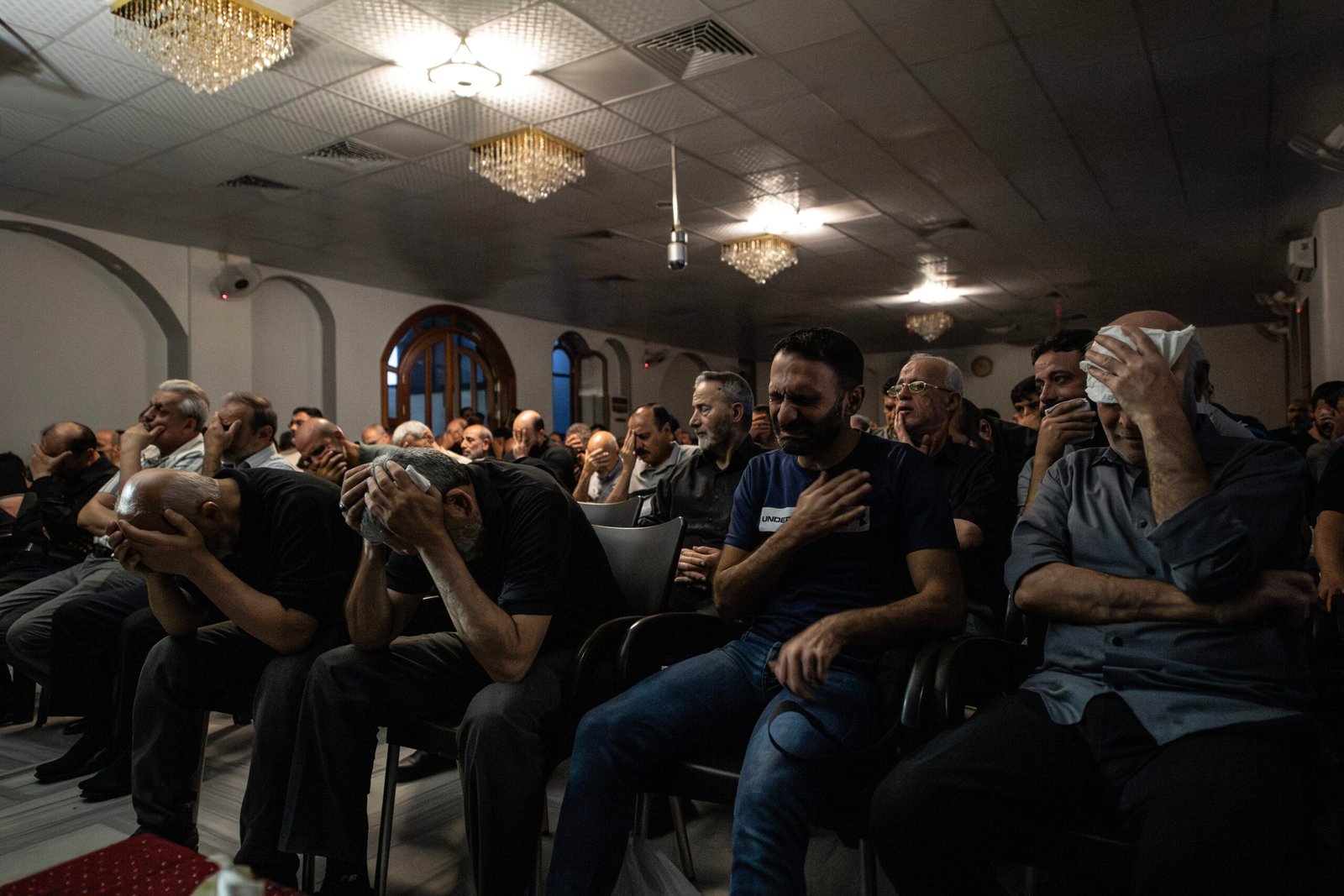
By dawn, thousands of mourners in black were performing latmiyat, the rhythmic striking of the chest in unison with religious chants, to mourn Imam Hussein. It was an immersive sensory experience. Chants and drums filled every street, and I felt a rare freedom walking among them with my camera.
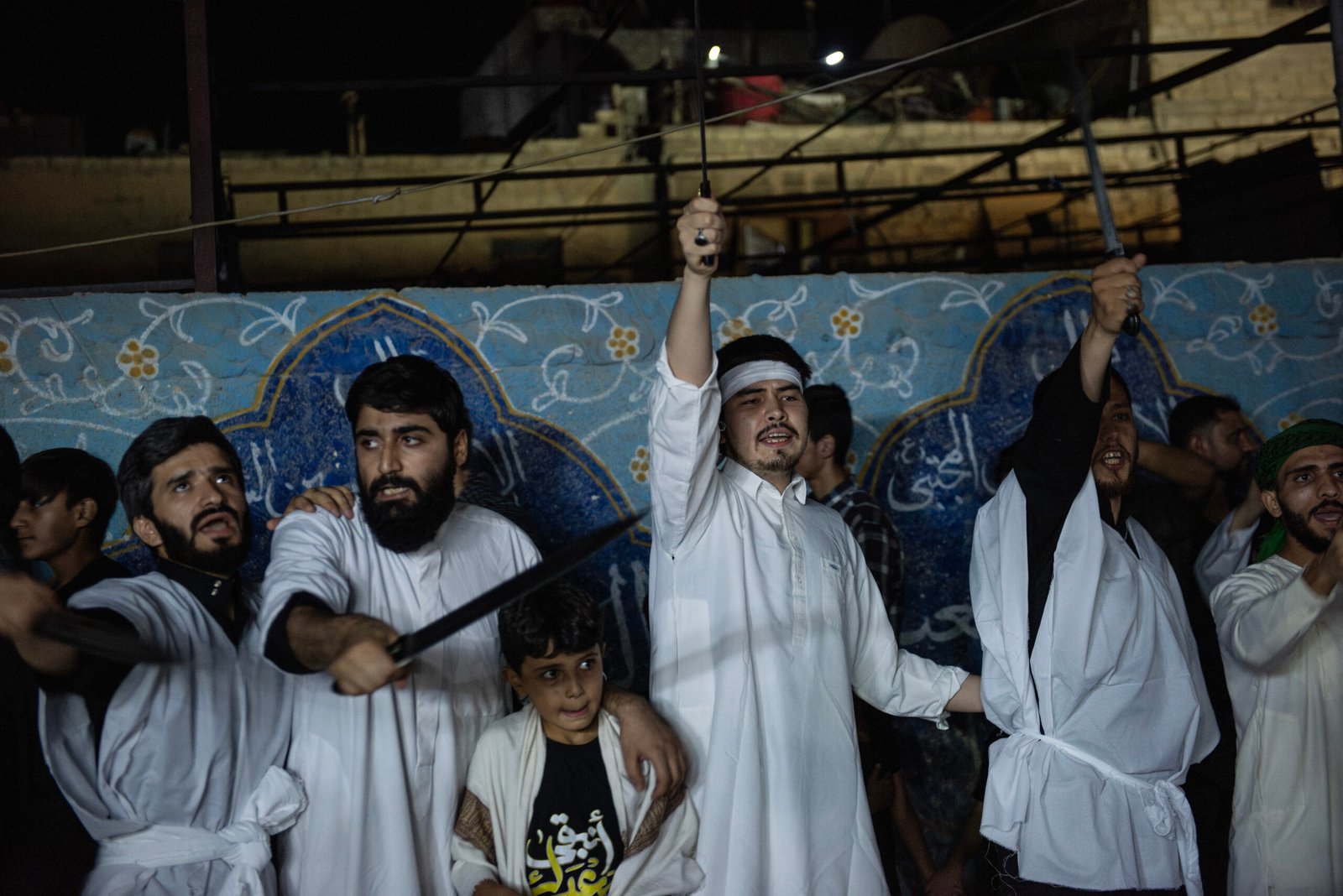
The Afghan tents remain most vivid. Everyone warned me away, but curiosity won. Inside, the atmosphere was tense. I shared no language with the men, most wearing white burial shrouds, who recalled the Afghan fighters I had seen on Syria’s front lines. I took a few photographs and left, realizing my fear came less from them than from the memories I carried.
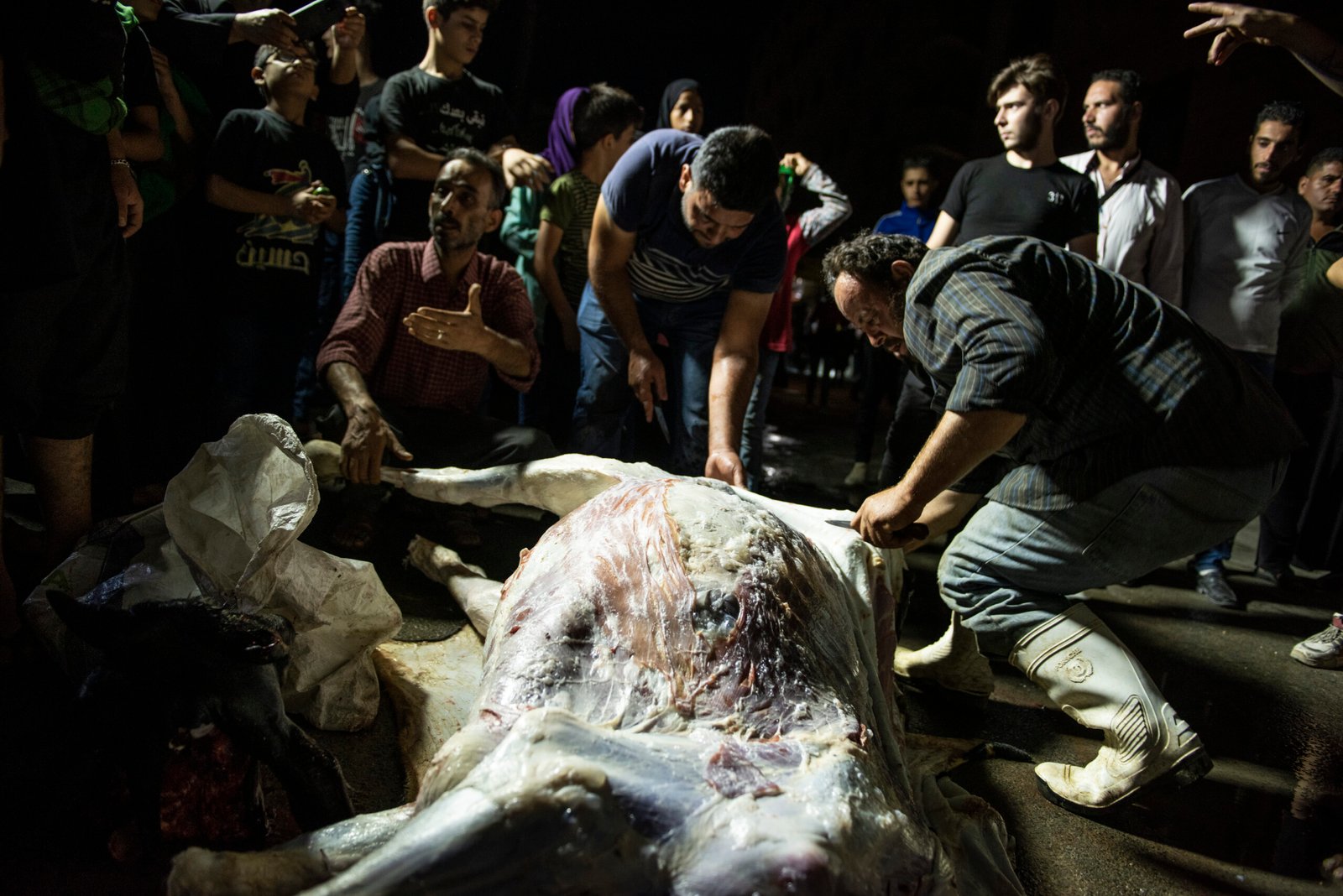
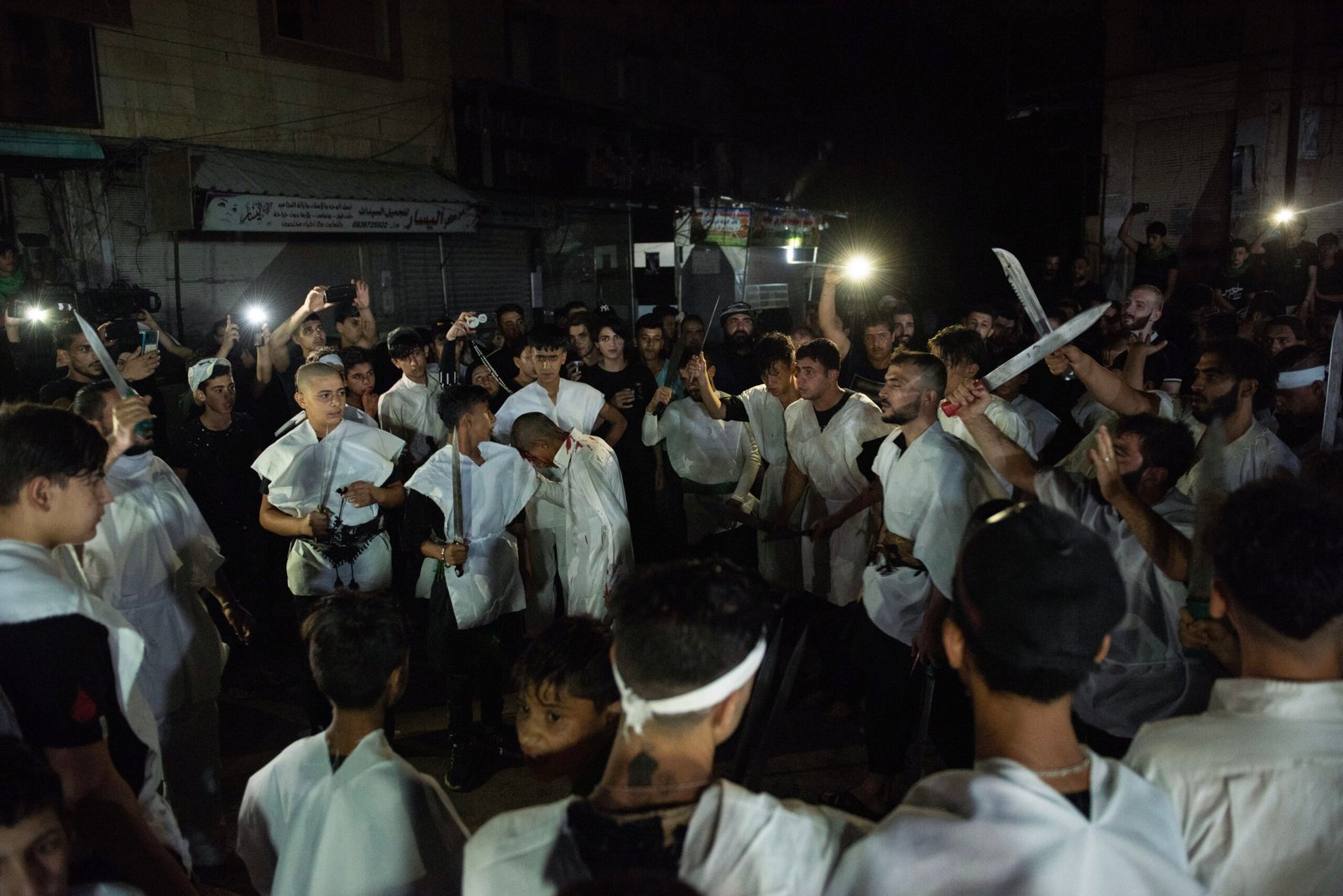
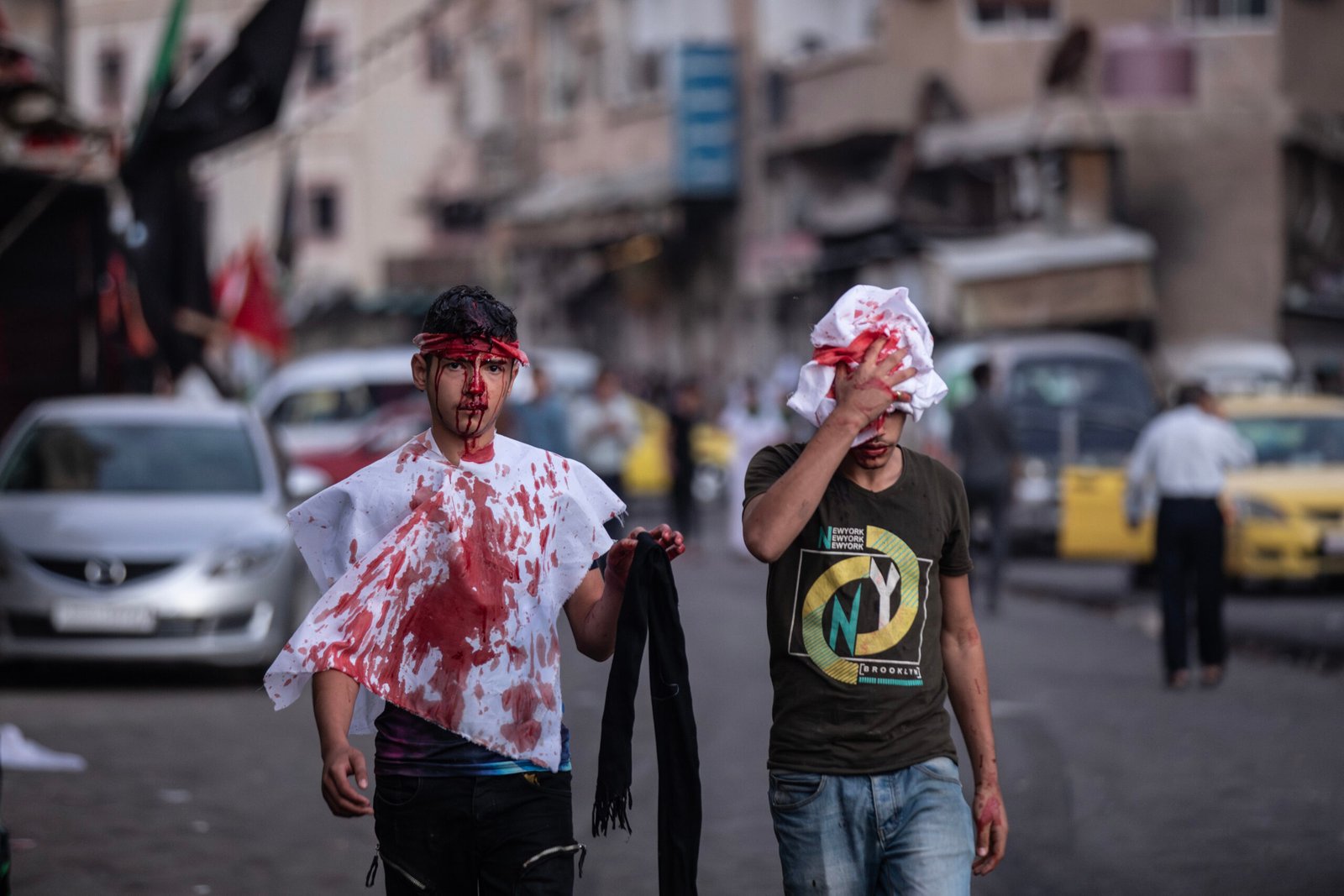
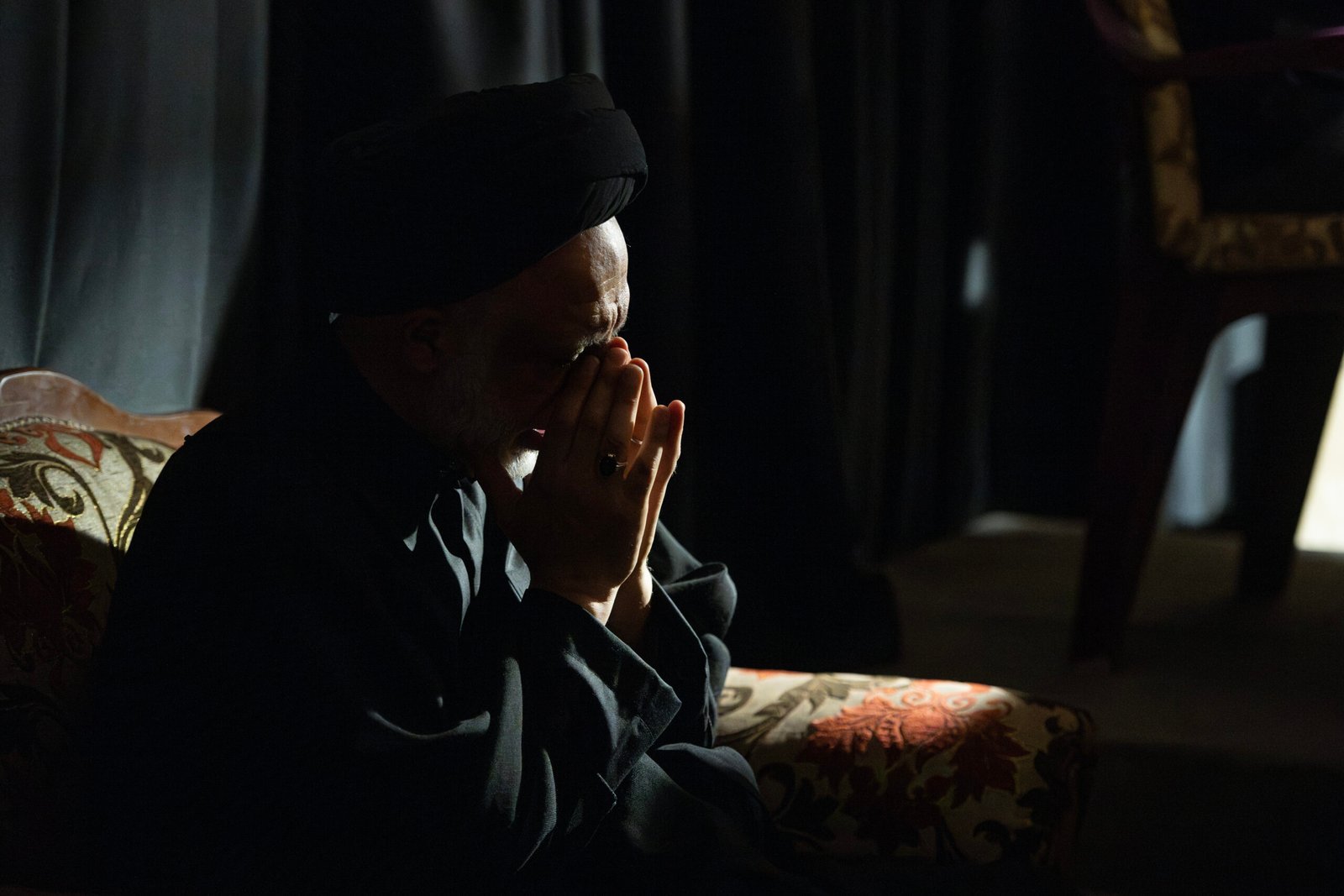
That morning was only the beginning. Over the next four years, I photographed Ashura in secret, documenting rituals few outsiders ever saw.
After the regime fell, everything changed. With Hayat Tahrir al Sham, formerly Jabhat al Nusra, in power, Ashura has become muted and cautious, shaped by fear and threats. The crowds have largely retreated from public view, and my photographs now document a world that may never return in the same form.